
The Inverted Fullback Effect: Why Wingers Are the New Strikers
As fullbacks tuck inside to control possession, the winger inherits the touchline alone, and often abandons it entirely, cutting inside to attack the goal directly. The knock-on effect is a quiet demotion for the traditional striker, who's increasingly asked to create space rather than occupy it, while the real goal threat comes from wide players arriving centrally at pace.
For most of football's history, the winger's job was to get to the byline and put the ball in the box. The striker's job was to be there when it arrived. That division of labor has been quietly dismantled over the last decade, and the fullback is the position most responsible for dismantling it. As fullbacks have inverted into midfield, wingers haven't just changed how they attack. In many of the best sides in the world, they have effectively become the primary goal threat, while the nominal striker has been demoted to a decoy.
What the Inverted Fullback Actually Does
The inverted fullback tucks inside during buildup rather than overlapping down the touchline, turning a back four into something closer to a back three or a double pivot in possession. Pep Guardiola popularized the idea at Bayern Munich with Philipp Lahm and David Alaba, and it has since become close to the default setup at the highest level. Arsenal, Manchester City and Chelsea have all built systems around it, with fullbacks stepping into central areas to help control possession and outnumber the opposition midfield.
That single positional shift changes everything about the width of the team. If the fullback isn't providing it, someone has to. The job falls to the winger, who now has the entire touchline to himself rather than sharing it with an overlapping runner.

Width Was Never the Point, It Was the Excuse
Here's the part that gets missed. Once a winger owns the flank alone, he isn't obligated to stay out there. With no fullback overlapping outside him and no defender's decision to make about who to track, the winger is free to drift inside into the space the fullback vacated, cut onto his stronger foot, and attack the goal directly rather than the byline. This is the inverted winger, and it is now the standard pairing with an inverted fullback rather than the exception.
The tactical logic compounds itself. An inverted fullback creates central passing options and defensive cover; an inverted winger, running the other direction, occupies the space that opens up in the half-space between the opposition's fullback and center-back, which is statistically the most dangerous zone on the pitch to receive the ball in. Defenders are left with an impossible choice: track the winger inside and open the touchline for a late fullback run, or hold width and leave the winger free to shoot or thread a pass through the middle. Either way, the winger is now operating in the exact zones a classic number nine used to occupy.
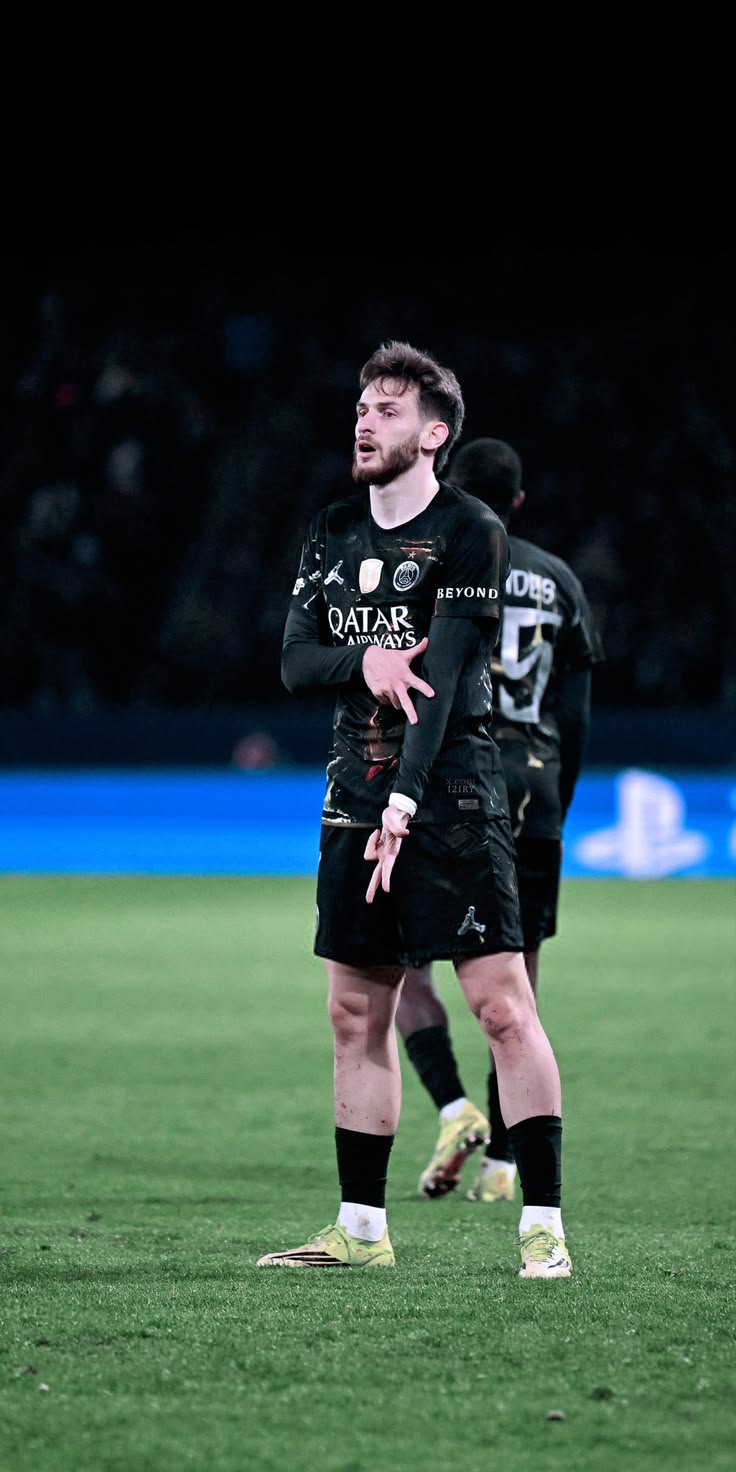
The Striker's Demotion
This is where the effect on strikers becomes unavoidable. In systems built this way, the center-forward's primary job increasingly is not to score. It's to occupy both center-backs, drag them out of position, and open the central channel the inverted wingers are attacking. Movement and space creation take priority over direct goal involvement, with clinical finishing treated as a bonus rather than the core requirement. A false nine achieves something similar by dropping deep to overload midfield and pulling a center-back out of position, creating exactly the kind of gap an inrushing winger can exploit. Either way, the frontman becomes a decoy, and the actual goal threat comes from wide players arriving into central areas at pace, unmarked, because the width they used to be responsible for is being provided by someone else entirely.
The statistics back up what the eye test suggests. Wide forwards operating in inverted roles are increasingly the leading scorers and chance creators in possession-heavy sides, often outproducing the striker nominally leading the line. That isn't a coincidence of individual talent. It's the structural output of a system that funnels the ball to wingers in central, high-value positions while asking the center-forward to do the unglamorous work of creating space rather than occupying it.

Not Every Winger Benefits, and Not Every Team Wants This
It's worth being honest about the trade-offs. This system depends on genuinely two-way fullbacks who can defend in wide areas without the protection of a traditional winger tracking back, and on wingers technical enough to operate in tight central spaces rather than simply beating a full-back for pace on the outside. Traditional, touchline-hugging wingers who rely on crossing don't fit this model at all, and teams that lack that profile of full-back are often better served keeping their width old-fashioned and their striker central. Crossing volume across the top leagues has actually stayed high in places precisely because not every team has made this switch, and not every opponent, particularly compact, low-block sides, is best attacked through the middle in the first place.
But at the clubs setting the tactical agenda, the shift is unmistakable. The number nine used to be the point of the attack. Increasingly, he is the setup man for it, while the winger, freed from the touchline by a fullback who no longer needs him there, has become the one arriving in the box to finish the move he used to only start.dr Zinchenko into the midfield pivot, teams create central overloads that force opposition defenses to compress.