
The Death of the Traditional Number Nine
The No.9 hasn't died: its job has been unbundled. How fluid frontlines from Man City to Barcelona to this summer's World Cup are forcing pressing structures to be rebuilt from scratch.
In February, Newcastle United travelled to Barcelona having spent a combined €130 million on two strikers over the summer: Nick Woltemade and Yoane Wissa, both genuine, old-fashioned No.9s bought to lead the line. Eddie Howe's side fell behind and spent the entire second half chasing the game. Neither striker left the bench.
It wasn't an oversight. It was a selection philosophy, and it is becoming the default one.
A few weeks later, on the other side of the same competition, Hansi Flick sent Barcelona out against Atlético Madrid with no recognized centre-forward in the XI at all. Dani Olmo led the line as a false spearhead, Lamine Yamal and Marcus Rashford floated either side of him, and Robert Lewandowski was an option on the bench, not a starter.
The No.9 shirt still exists. The job description stitched to it doesn't.
The Anchor We Used to Trust
For most of football's modern history, the striker was the fixed point everything else was built around: in attack and, just as importantly, out of possession. A back four knew who they were marking. A midfield knew where the ball would be aimed. And crucially, the opposition's first line of pressing had an obvious job: the No.9 pinned the centre-backs, forced the first pass wide or long, and gave his own midfield a clean picture of where to close down next.
That fixed point is what's disappearing: not the goals, not even always the target-man archetype, but the reliability of *where* the pressing structure starts.

The Original False Nine
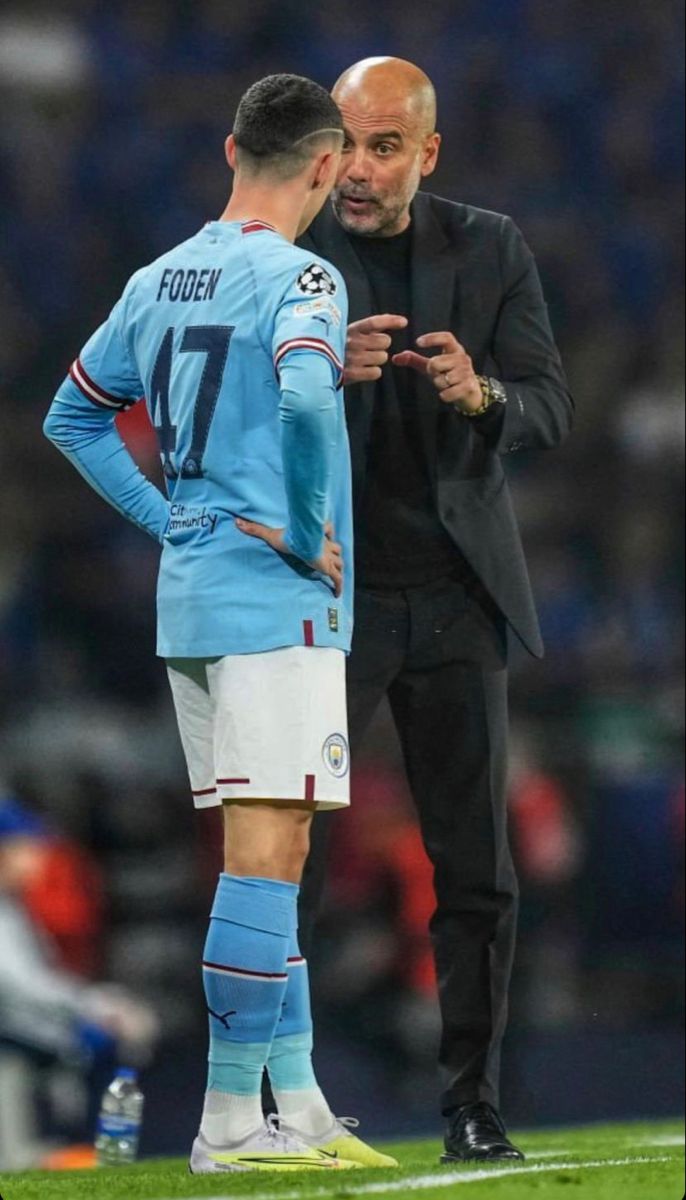
This isn't a new idea so much as an old one being generalised. Pep Guardiola's Manchester City won the Premier League in 2020–21 with barely a recognised striker on the books, rotating Kevin De Bruyne, İlkay Gündoğan and Phil Foden through a false-nine role that dragged centre-backs out of the defensive line and opened central channels for late-arriving midfielders. Roberto Firmino did something similar at Liverpool under Jürgen Klopp: a No.9 whose primary value was pressing, not poaching, leading Liverpool's front line from deep positions and initiating the press higher up the pitch than a traditional striker ever could.
What's changed by 2025–26 is the scale. PSG now use Dembele interchangeably as a false nine and an inverted winger. Foden still drifts inside for City. Barcelona's Olmo experiment against Atlético wasn't an emergency measure. It was a considered selection with a genuine centre-forward unused on the bench. The false nine has stopped being a special-occasion tactic and become a default setting for several of Europe's biggest clubs.

What the Numbers Say
Pressing intensity is measured most commonly through PPDA (Passes Per Defensive Action), or how many passes an opponent completes before a team makes a tackle, interception or foul in the attacking two-thirds of the pitch. Lower numbers mean more aggressive, higher pressing; teams sitting in a mid-or-low block naturally post higher figures.
The most recent full Premier League season put Liverpool at the top of the pressing charts with a league-low PPDA of 9.89, continuing a lineage that stretches back to Klopp's 7.58 in the 2019–20 title season, a full 5.6 passes more aggressive than a mid-table Tottenham side the same year. But the same dataset showed Manchester City, the club that popularised the false-nine press in English football, drifting the other way: a PPDA of 12.29, the second-highest figure among the league's traditional "Big Eight," and a marked decline in pressing aggression from their 2020–21 peak.
That divergence matters. It tells us the false nine was never really about pressing harder in some abstract sense. It was about pressing from a different starting shape. City under Guardiola have increasingly prioritised positional control and ball retention over raw press volume, while Liverpool's fluid front line still presses with total conviction. Two clubs, two of the most influential attacking systems in Europe, arriving at the false-nine idea and then pulling in opposite defensive directions. The tactic has fractured into philosophies.
The World Cup as a Live Laboratory
If club football has been experimenting, the 2026 World Cup has turned the experiment into a live broadcast. Several of the tournament's best-organised sides (Morocco, Mexico and Germany among them) have leaned into a selective, mid-block pressing approach rather than committing bodies forward continuously, waiting for a specific trigger (a heavy touch, a backward pass, a ball played into a crowded channel) before stepping up as a unit. Norway's win over Brazil was built on exactly this patience, absorbing pressure before a single line-breaking pass from deep created the space that mattered.
The tournament's broader data tells a similar story about transition speed rather than fixed structure: winning teams have recovered possession, on average, roughly four seconds faster than losing sides after a turnover, a gap that has proven more predictive of results than possession share or even shot volume. The differentiator in 2026 hasn't been who has a striker standing on the last line. It has been who reacts fastest to losing the ball, regardless of who was occupying the front line when it was lost.
Rewriting the Press: What Actually Changes
Here is the structural shift that the phrase "fluid frontline" tends to gloss over. When a team fields a fixed No.9, the identity of the first presser is never in question: it's the striker, every time, pinning the same centre-back for ninety minutes. Remove that fixed point and someone still has to do the job. It just isn't the same body doing it from minute to minute.
That forces three structural changes on the team trying to press:
The first presser becomes a rotating assignment. Whoever is nearest the ball-side centre-back when possession is lost has to step, while a teammate covers the passing lane into midfield behind them. This requires far more collective spatial awareness than simply picking a target man who can run at centre-backs and win the physical battle.
Cover shadows replace fixed marking. With no single striker occupying the last line, wide forwards and attacking midfielders have to screen passing lanes rather than mark specific bodies, angling their run to block the pass to the pivot rather than committing to a single opponent.
Rest-defense becomes non-negotiable. A fluid front line naturally pushes more bodies further forward at once, which multiplies the transition risk if possession is lost in an advanced area. That's precisely why counter-pressing structures and the kind of instant-recovery data driving World Cup outcomes this summer have become as important to modern coaching staffs as anything happening further up the pitch. Teams that press with a false nine aren't just choosing a different first line. They're accepting a different, riskier second line, and building specific pre-set defensive shapes to cover for it.
The Vacuum Problem
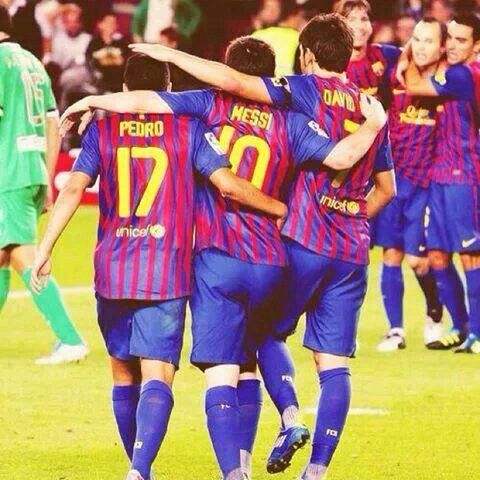
None of this is unconditionally positive, and the clearest cautionary case has been England's own recent tournament history. Critics have repeatedly pointed to a specific failure mode: when a converted midfielder leads the line without service, their instinct is to drop deeper to touch the ball, abandoning the last line entirely. Opposition defenders then step up unchallenged, the pitch compresses, and what should be fluidity curdles into a stalled, sideways-moving attack with no penetration into the box. Possession numbers can spike while genuine chance creation collapses.
The lesson isn't that fluid frontlines are a superior system in the abstract. It's that they are a specific tool requiring specific runners: wide players and late-arriving midfielders willing to occupy the space a false nine vacates. Without that runner, the system doesn't distribute the No.9's old job; it simply deletes it.

Unbundled, Not Dead
Call it what it actually is, then: not the death of the No.9 as a function, but its unbundling. Pinning the backline, triggering the first press, threatening in the air, finishing inside the box: these used to be one job description assigned to one body for the full ninety minutes. Increasingly, elite teams are distributing those four jobs across three or four different players depending on the phase of play, the opponent's shape, and the minute of the match.
The shirt number will survive. Someone will always wear the 9. What won't survive, in more and more of Europe's biggest dressing rooms, is the assumption that the man wearing it is the one your press is built around.